

November 17, 2026

Getting a mammogram can come with a lot of information, and sometimes a result you weren't expecting: dense breast tissue. If you've never heard of breast density before, seeing those words on your mammogram report can understandably raise questions. Does it mean something is wrong? Does it increase your risk of breast cancer? Do you need additional testing?
The good news is that “dense breasts” is not a diagnosis. The term simply describes the amount of dense fibrous and glandular tissue compared with fatty tissue in your breasts. While you can't determine breast density by looking at or feeling your breasts, mammography can reveal it.
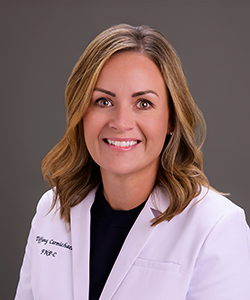
"The best way to detect breast density is mammography, hands down," says Tiffany Carmichael, FNP, an MU Health Care family nurse practitioner specializing in breast cancer prevention and early detection. "You cannot feel breast density. And you cannot gauge breast density based on an exam."
While having dense breasts is normal, it can affect breast cancer risk and detection. Here's what to know if your mammogram says you have dense breast tissue:
1. Dense Breasts Are More Common Than You Think
If you have dense breasts, you are not alone. Nearly 50% of women over age 40 who get mammograms have dense breast tissue.
"Dense breasts are totally normal," Carmichael says. "In fact, most women will have dense breast tissue at some point in their life. It doesn't mean there is something wrong with you, just that your breast tissue is structured differently."
Dense tissue typically creates the structure of your breasts and includes the glands, milk ducts and fibrous tissue that helps hold your breasts in place. But not all dense breasts are created equal.
Experts describe a woman's breast density according to four categories:
- A: Approximately 10% of women have breasts that contain nearly all fatty tissue and very little, if any, dense tissue.
- B: In 40% of women, scattered areas of dense tissue account for 25% of the breast tissue.
- C: When at least 50% of the breast tissue is dense — which occurs in 40% of women — it is categorized as "heterogeneously dense."
- D: In about 10% of women, 75% of their breast tissue is dense and considered "extremely dense.
If your breast tissue falls into categories C or D, you have dense breasts. Your health care provider may recommend additional screening and want to discuss your breast cancer risk.
2. Dense Breast Tissue Increases Your Risk for Breast Cancer
Having dense breasts (categories C or D) increases your breast cancer risk by 15% to 20%. It doesn't mean you face a higher risk of death from breast cancer than someone with non-dense breasts — just that your chances of developing it are higher.
The reason is simple.
"Breast cancer tends to form in the ducts of the breast. If you have more ducts, i.e., dense breast tissue, you will have more cells that can turn into cancer," Carmichael says.
But dense breast tissue is just one risk factor for breast cancer. Your risk takes many factors into account, including family history of breast or ovarian cancer, culture, age of first menstruation, age when you had your first child, history of breast biopsy, chest radiation at a young age and a history of hormone replacement therapy. It's critical to understand your overall personal risk and how breast density influences it.
"A risk assessment is key in determining how likely you are to develop cancer," Carmichael says. "Since breast density is part of that, it should initiate discussion about what else you should be thinking about and doing to protect yourself from breast cancer."
3. Breast Density Can Change Over Your Lifespan
Age and hormonal fluctuations can cause significant changes to how your body appears and functions. Breast tissue is no exception.
There are several reasons your breast density may change, including:
- Age: Breast tissue typically becomes less dense with age.
- Hormonal changes: Pregnancy, breastfeeding and hormonal replacement therapy increase breast density. The change is often — but not always — temporary.
- Weight loss: Losing weight often eliminates fatty breast tissue, increasing the percentage of dense breast tissue.
"When you're young, breast density tends to be abundant," Carmichael says. "As we get older, we tend to see a slow, steady decline in breast density. However, there's a caveat to that group — there is always a small group of women who defy the odds."
4. People With Dense Breasts Should Consider Additional Screening
Dense breast tissue isn’t only associated with breast cancer risk. It can also make detecting breast cancer more challenging.
On a mammogram, fatty breast tissue appears dark or translucent (see-through). Dense tissue, on the other hand, looks white. Since tissue abnormalities and tumors also show up as white, they are not always obvious against dense tissue.
That doesn't mean that mammograms miss cancer — statistically, it's not common. But there are additional tools that allow clearer images of dense tissue, such as:
- Magnetic resonance imaging (MRI), which uses strong magnets and radio waves to see through dense tissue
- Ultrasound, which uses sound waves to create images
"MRI is the gold standard for dense breast imaging, but it can be costly and should not replace a mammogram," Carmichael says. "Ultrasound is the next best option."
Guidelines from the American College of Radiology recommend that MRI is considered in patients with dense tissue — even if you have no other risk factors. Additional imaging is not something you have to do. But it should absolutely be considered and discussed with someone who specializes in high-risk screening, because there are pros and cons to consider.
MRI allows a clearer picture of dense breast tissue, but that carries with it a higher incidence of callbacks and false positives. That means extra workup, ultrasounds and potential biopsies — possibly for a noncancerous finding. Those extra steps can be slightly traumatizing and costly.
"Having dense breasts is not a diagnosis, and it doesn't mean you will get cancer," Carmichael says. "It's simply information that should alert you to have a discussion with your primary care provider, OB/GYN or high-risk breast cancer specialist. The goal is to better understand what this information means for you and what your next steps should be."
Next Steps and Useful Resources
- Have dense tissue and want to discuss your risk? Learn more about our high-risk breast clinic.
- Due for a mammogram? Schedule one today.
